 I just read another review of the recent movie based on the life of Hank Williams, “I Saw the Light”, written and directed by Marc Abraham and starring Tom Hiddleston. And like most other reviews, it said that the movie was not worth seeing. The Rolling Stone review (one star) encapsulated the movie perfectly – other than the good performance by Hiddleston, the movie is “completely bogus”. And a review from Variety noted that, “Despite a thoroughly committed, impressive performance from Tom Hiddleston as Williams (and an even better one from Elizabeth Olsen as his first wife, Audrey), the film tackles the life of one of the 20th century’s most seminal musicians with all the passion of a stenographer, making for a dull, unfocused slog through what should have been an effortlessly cinematic story.” And finally having just seen the movie, I heartily agree with the reviews quoted above.
This is very disappointing because there are not many musical lives that could make a more dramatic movie than Hank’s: poor childhood in the deep south, absent father, strong mother, chronic physical ailment, loneliness, musical influence and growth, songwriting, multiple marriages and relationships, alcoholism, musical stardom, tragic early death, unfulfilled promise, rich musical legacy.
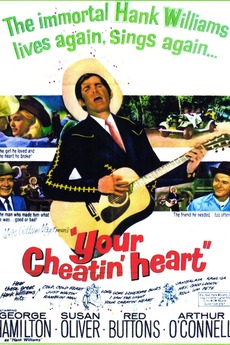 But even with Hank’s life providing such rich material for a great movie, there have been only three other movies about Hank, all at least as seriously flawed as “I Saw the Light”. The earliest, “Your Cheatin’ Heart”, made in 1964, made the fatal mistakes of casting ever-preppy George Hamilton as Hank and engaging the services of Audrey Williams, Hank’s wife, as advisor. Audrey strove to make sure she was portrayed favorably throughout the movie, even magically showing up on the night he died. Despite Hamilton’s lip-synching, the music, performed by 15 year old Hank Williams Jr. is the movie’s best feature.
 “Hank Williams: the Show He Never Gave”, a low-budget Canadian film made in 1980 and shot in 16mm portrayed Hank on the night he died actually making it to the concert in Ohio and singing his best songs. The star, musician Sneezy Waters, actually did a great job of depicting Hank and singing his songs. It was nominated for the 1983 Tex Ritter Award at the Country Music Awards Show but lost out to Robert Duvall’s “Tender Mercies”. The movie never made it to the big screen and was limited to television and as a mythical tiny slice of Hank’s life fell far short of showing us the real Hank Williams.
 “The Last Ride”, made in 2011, failed also as a fitting portrayal of Hank Williams. This low budget movie of Hank’s last three days alive, ending with the fatal car trip from Alabama to Canton, Ohio on New Years Eve 1952, is a cacophony of coughing, drinking and fighting that adds absolutely nothing to our knowledge of Williams and his music.
Obviously it seems that no one with a real love and understanding of his music and its roots has made a movie about Hank. Unfortunately all seem like cheap efforts to capitalize on the man’s legendary and tragic life without paying sufficient tribute to that life and awarding it the value it deserves.
I first heard Hank Williams when I was a 10 year old kid in New Jersey on “The Hometown Frolic” on Newark station WAAT deejayed by Don Larkin and was deeply affected by his voice and his songs. Hank’s music perfectly depicted loneliness and sadness and as a lonely boy in a huge, very confused and chaotic family his music touched me deeply.
Some years ago, still enjoying Hank’s music as well as that of Hank Jr. I bought Colin Escott’s fine “Hank Williams: The Biography” which I happily digested, and later seasoned with a lovely illustrated biography by the same author and Kira Florita titled, “Hank Williams: Snapshots from the Lost Highway”. These books contained details of Williams’ life that I would consider essential to understanding him and consequently including in any movie about his dramatic life. Abraham’s film claimed to have been based on Escott’s book, republished under the title of “I Saw the Light”, but the most important features of the book, essential to understanding Hank’s life and music were obviously ignored. I have often speculated about what a really good movie about Hank Williams ought to include in order to really capture a life as special and as tragic as his. What kind of movie would I make about his life if I ever had that opportunity?

Young Hank
First, my movie would emphasize his boyhood much more. Hank’s childhood was a time of intense loneliness for him, having essentially an absentee father who was away working in lumber mills and on the railroad for weeks and months at a time. And when Hank was a young adult that same father, Lon, was still absent from his life, spending several decades in a VA hospital recovering from injuries received in the World War I. I would have included scenes of a very lonely little boy and a very lonely young man missing his father, sitting or walking alone, with some of his music in the background and scenes of him playing guitar and singing alone.
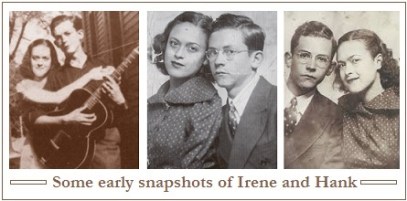 Hank also suffered from a painful congenital back condition called spina bifida occulta. Because of this condition he never involved himself in sports as other kids his age did, and as a youngster in an area of the country where physical strength and coordination was greatly valued, this weakness and frailty caused even more “apartness” and loneliness for Hank as a young boy and teenager. Take a look at some of the photographs of Hank as a young boy and observe the way he held himself, always standing somewhat crookedly in group pictures, likely because of this problem.
Hank and sister Irene
This back condition grew worse over the years and was probably as responsible for his heavy drinking as his aloneness and disappointment in love. So my Hank Williams movie would have paid much more attention to his physical condition and pain which exacerbated his isolation and loneliness. And I would have included scenes of him wistfully watching other young kids participating in sports and perhaps some scenes of he and his mother visiting a doctor seeking treatment and relief for the condition.
I also would have devoted much more script and screen time to his early musical experiences. Although neither parent was particularly talented in music, his mother, Lillie, did play the organ in church and Hank could recall with pleasure sitting with his mother as she played and singing along with her. Also as a boy, Hank became acquainted with Rufus Payne, a well known black street musician in Georgiana, his Alabama town, known as “Tee Tot”, who was said to have taught Hank his first guitar chords. These experiences, along with obtaining his first guitar, would have been essential parts of my movie. Scenes of little Hank singing with his mother and getting some lessons from Tee Tot would have been quite dramatic as would his commitment to music as a substitute for physical activities.

After his musical tutelage and experiences with Tee Tot, Hank began singing outside his mother’s boarding house for pennies, nickels and dimes, a great scene to include in a movie. Incidentally, some of Hank’s biographers have suggested that this house of his mother Lillie was perhaps just a little bit more than a “boarding” house and that other kinds of business transactions between lonely men and willing women were conducted to enhance her income. This possibility I would have subtly included in the movie as well – young Hank’s observance of such a sideline business would also have exacerbated his loneliness and feelings of being left out, and contributed to the passion and artistry in his future songwriting and performing.

Hank, Lillie, Irene and cousin J.C. McNeil
Biographer Escott also tries to shed some light on Hank Williams’ superb word-smithing skills, quite remarkable for a young man who did not even finish 8th grade. Escott claims that he obtained the inspiration for many of the words and phrases in
 his songs from romance comic books that he read as a young man and continued to read into his adulthood and his prime songwriting years. In my movie about Hank I would have included key scenes of young Hank reading these sources, then writing and singing some lines. Some scenes of a young Hank in church soaking up some old gospel hymns also would have been very useful in explaining Hank’s passion for music and the well chosen word. The centrality of Hank Williams’ songwriting in his life would have been emphasized in my movie. And a singer performing and recording mostly his own songs was unique for the time since other country singers generally employed songs written by others. In this sense, Hank was certainly ahead of his time, since country singer-songwriters are now quite common.

Early “Drifting Cowboys” band, L-R Pee Wee Moultrie, Charlie Mays, Sue Taylor, Hey Adair, Hank
That Hank Williams was an alcoholic and that this condition damaged his career and his relationships is well known. What may be less well known is how his drinking habit began and how it was fostered. Scenes of a young Hank having his first drink at age 11 and drinking with young friends would be essential to my story as well as his later drinking as an adult being related as much to the physical back pain he suffered as well as the explosive relationships with the many women he knew. I would have included far fewer of the the arguments, fights, physical abuse, cursing and name-calling that constituted so many scenes from the recent “I Saw the Light” and more focus on the inexorable decline of his artistry.
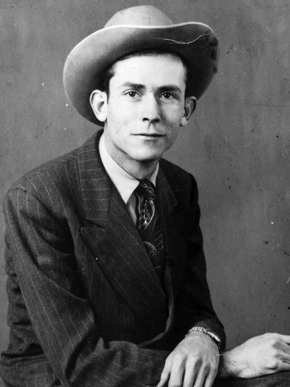
Young Hank
My Hank Williams movie would have given much more attention to the influence of strong women in his life. The role of his mother Lillie would have been thoroughly explored, from her being essentially the sole support of the family during the absence and eventual incapacitation of his father Lon, to her playing the role of his first “manager” during his early success as a performer. His relationship with his first wife Audrey would have been more thoroughly considered as well. Audrey’s self deception as a talented singer would bear some deeper examination as well as the extended and painful conflict between Hank and her when she insisted on performing with him on the road and accompanying him on recordings. This conflict was completely disregarded in “Your Cheatin’ Heart” since she herself played an important role in the production of the movie, but emphasized ad nauseam in “I Saw the Light”. Really, Hank should never have compromised his artistry by including Audrey, but his struggle with the control of strong and influential women was integral to his life.

Hank Performing
My Hank movie would also have developed a fuller picture of his rapid physical descent before his death. His being fired by the Grand Ole Opry, not showing up for many of his concerts, all symptomatic of his increasing reliance on alcohol and addiction to prescription painkillers, could have been portrayed much more sympathetically and clinically than in other movies of his life. The shame of his separation from the Grand Ole Opry to resuming Louisiana Hayride appearances to playing in small clubs like the ones he was headed toward in Charleston, West Virginia and in Canton, Ohio, in the days before he died, would have been dramatically related in my movie. Connected to this descent, the rapid, almost simultaneous, collapse of many of his sources of support – music publisher Fred Rose finally giving up on him. the departure of his own band, “The Drifting Cowboys”, leaving him to accompany other artists, would have played an important part as well. Furthermore, Hank’s forays into Hollywood and national television shows may have prompted sudden and serious feelings of inadequacy. Except for his driver, Charles Carr, Hank was truly alone on that last trip in the light blue Cadillac on New Years Eve 1952.

Hank and a young fan, circa 1950
Throughout my Hank Williams movie there would somehow have been included an ongoing recognition of and tribute to the popularity and immortality of his songs. Rarely has a songwriter been so often paid the ultimate tribute of having other artists record his songs. As examples, a recent check of “Jambalaya” on the iTunes store revealed no fewer than 30 versions of the song by different artists. My own digital music library features 14 recordings, from the gorgeous lilting rendition by the Carpenters, to a distinctly ’50’s pop version by Jo Stafford to more traditional versions by Freddy Fender, Fats Domino, Jerry Lee Lewis, and many others. Consider “Cold, Cold Heart” or “Your Cheatin’ Heart” and try to count the myriad recordings of these songs, which include not only dozens of country artists but also notable interpretations from the likes of Ray Charles, Tony Bennett, Norah Jones and Beck. Of course, Hank’s timeless “I Saw the Light” is by far his most recorded song and has become such a staple of the pop, gospel, country, folk and rock repertoires that quite often, listeners forget Williams wrote it and attribute it to a “traditional” origin instead. Over 150 songs are listed as having been written by Hank or Hank and an occasional collaborator, an amazing number for anyone, much less someone with such a limited education and painfully abbreviated life.

Audrey, Hank, hank Jr., Lycretia circa 1950
Finally, in my movie about Hank there would be a footnote collection of scenes about the death of Hank, his funeral and the legal tussles over his still substantial estate of song royalties. There would also be some of the inspirational story of his “lost” daughter whose acknowledgement and legal right to a share of this legacy was only recently established.

Bobbie Jett
At Hank’s funeral, somewhere among Audrey, Hank Jr., sister Irene, mother Lillie and 25 thousand other mourners paying their last respects was Bobbie Jett, nine-months pregnant with Hank’s child. The baby girl was born two days later and immediately given to the care of Hank’s mother who after two years gave her up for adoption. This story, worthy of a country song or two by itself would be featured in this “footnote” as well. Perhaps my movie could begin with Hank’s death, his funeral, a flashback to the affair with Jett, something about te little girl’s adoption and life and finally discovering her famous father. Then the movie could proceed with the account of Hank’s early life.
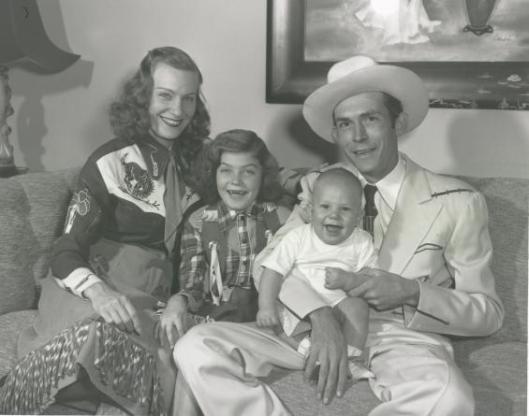
Hank and family, 1949
So yes, Hank’s tragic life and his incredible music have been sold short in the several clumsy and exploitative attempts to successfully put it on the big screen. I wish terribly that I had the talent to write a proper screenplay about his life and even more, I wish I had the entertainment world connections to sell it to a producer and hire the right director to finally get a real Hank Williams movie up on the screen.
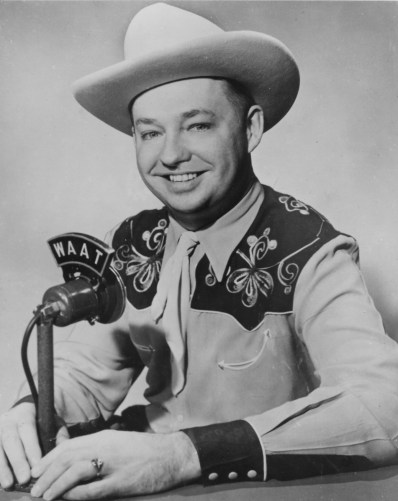
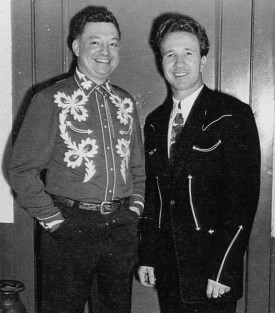

 The Republic article was prompted by the occasion of the 20th anniversary of the death of Elvis Presley, whom Mr. Larkin had met and at the behest of his then agent, Bob Neal, had played and promoted “Baby, Let’s Play House”, one of Elvis’ early Sun recordings, on his radio show.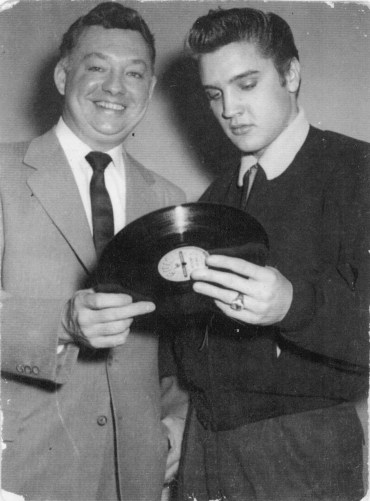

 The following summer it was my pleasure to visit Don and his wife Peggy in their Phoenix home and reminisce about his time on the Hometown Frolic. Don was effusive and ebullient in describing the old days at WAAT and his years as a promoter of country music shows in the New York area. And I felt the same way with the pleasure of finally meeting Don and being able to talk with him personally. And it was a privilege to have my picture taken with my childhood hero and country music mentor.
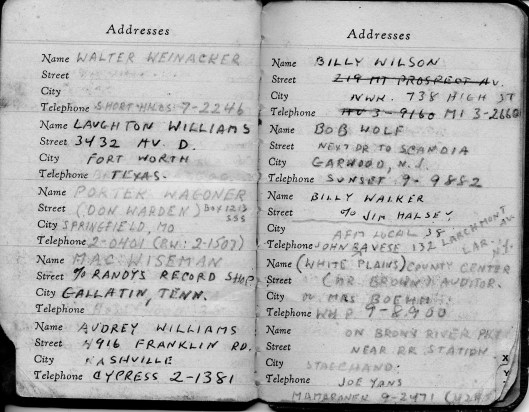
 During a subsequent contact Peg said she had put together a packet of mementos for me so I stopped by one day to pick up a tan envelope containing some real treasures. I felt very privileged to receive this gift, for in addition to pictures of Don at the height of his success and popularity as a deejay and the original (I think) letter from Bob Neal asking Mr. Larkin to play Elvis’ recording, Peg had given me the address book that Don had kept as a deejay and promoter. I was thrilled to leaf through this precious little “who’s who” of 1950’s country music and find so many familiar names (along with addresses and phone numbers), among them Hank Snow, Eddy Arnold, Chet Atkins, Elton Br
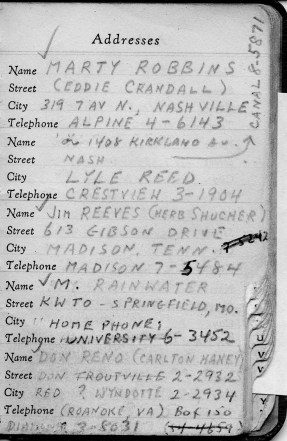 itt, Lefty Frizell, Stuart Hamblen, Freddie Hart, Grandpa Jones, Ralph Rinzler (member of the original Greenbriar Boys, booking agent for Bill Monroe and other bluegrass groups and later a folk music authority for the Smithsonian), Marvin Rainwater, Maxine Brown (of “The Browns”), Jim Reeves, Marty Robbins and…Audrey Williams, Hank Williams’ widowed spouse.
 Ralph Friedly